
Fissure pain after bowel movement commonly feels like a sharp cut, burning sensation or spasm that begins while passing stool and continues afterward. For some patients, the pain settles within minutes. For others, it may continue for several hours and interfere with sitting, working or daily activities.
This pain often continues because the small tear in the anal lining is repeatedly stretched during bowel movements. Spasm of the anal sphincter muscle may further reduce blood flow to the affected area and delay healing.
Many acute fissures improve with appropriate supportive care. However, persistent, recurring or severe pain should be medically evaluated to determine whether the fissure has become chronic or whether another anorectal condition is responsible.
Quick answer: Fissure pain may continue after a bowel movement because the tear becomes irritated and the anal sphincter muscle can remain in spasm. Pain lasting for hours, recurring bleeding or symptoms that do not improve should be evaluated by a doctor.
What Is an Anal Fissure?
An anal fissure is a small tear or crack in the tissue lining the anal canal. It commonly develops when hard or large stool stretches and injures the anal lining.
Although the tear may be small, the area contains sensitive nerve endings and is affected every time stool passes. This is why an anal fissure can cause severe pain even when the visible wound appears minor.
Common symptoms of an anal fissure include:
- Sharp or cutting pain while passing stool
- Burning or throbbing pain after a bowel movement
- Bright red blood on toilet paper or the outer surface of stool
- Fear of passing stool because of anticipated pain
- Itching or irritation near the anus
- A small skin tag near a chronic fissure
- Recurring pain after hard stool or constipation
Why Does Fissure Pain After Bowel Movement Continue?
Several connected factors can cause fissure pain to continue even after the bowel movement has finished.
1. The Tear Is Stretched During Stool Passage
When stool passes through the anal canal, the existing tear may stretch or reopen. Hard, dry or large stool can cause further irritation and restart the pain cycle.
2. Anal Sphincter Muscle Spasm
The internal anal sphincter may tighten in response to pain. This involuntary muscle spasm can continue after the bowel movement and cause persistent burning, throbbing or sharp pain.
3. Reduced Blood Flow to the Fissure
Continued sphincter spasm can reduce blood flow to the injured area. Adequate blood flow is important for tissue healing, so repeated spasm may contribute to delayed recovery.
4. Constipation and Repeated Straining
Frequent straining increases pressure around the anal canal. If constipation continues, the fissure may repeatedly reopen before it has had time to heal.
5. Inflammation and Local Irritation
The torn tissue may remain irritated after stool passage. Excessive wiping, loose stools or repeated bowel movements may further aggravate the area.
How Long Can Fissure Pain Last After a Bowel Movement?
The duration varies between patients. Pain may last for a few minutes or continue for several hours after stool passage.
Occasional pain after a hard stool may settle as the tear heals. However, recurring pain with every bowel movement can indicate that the fissure is not healing properly.
The duration of pain alone cannot confirm the severity of a fissure. The doctor must also consider how long the condition has been present, whether bleeding occurs and whether the fissure repeatedly returns.
Acute vs Chronic Anal Fissure
Acute Anal Fissure
An acute fissure is a recent tear. Many acute fissures improve when stool is kept soft, straining is reduced and the area is allowed to heal.
Even during this stage, medical evaluation may be appropriate if the pain is severe, bleeding continues or the diagnosis is uncertain.
Chronic Anal Fissure
A fissure that persists for approximately six weeks or longer may be considered chronic. A chronic fissure may develop raised edges, exposed muscle fibres or a small external skin tag.
Chronic fissures are less likely to heal with supportive measures alone and may require prescription treatment or a procedure selected according to the patient’s condition.
Common Causes and Risk Factors
Hard stool and constipation are common triggers, but they are not the only possible causes.
- Chronic constipation
- Passing hard, dry or unusually large stool
- Repeated straining during bowel movements
- Frequent diarrhoea or loose stools
- Low-fibre eating patterns
- Not drinking enough fluids
- Childbirth-related trauma
- Previous injury to the anal canal
- Certain inflammatory or infectious conditions
A fissure occurring away from its usual location, repeatedly returning or appearing with other digestive symptoms may require further evaluation to identify an underlying condition.
Fissure Pain vs Piles: What Is the Difference?
Patients often confuse fissures and piles because both conditions may cause bleeding or discomfort during bowel movements. However, their typical symptom patterns differ.
| Feature | Anal Fissure | Piles |
|---|---|---|
| Main problem | A tear in the anal lining | Swollen veins in or around the anus |
| Typical pain | Sharp, cutting or burning pain during and after stool | May be painless or cause discomfort, swelling and irritation |
| Bleeding | Usually a small amount of bright red blood | Bright red bleeding may occur during bowel movements |
| Lump | A small skin tag may develop in chronic cases | A swollen or prolapsing lump may be present |
| Pain after stool | May continue for minutes or hours | Usually less characteristic unless piles are thrombosed or irritated |
Symptoms alone cannot always provide an accurate diagnosis. Some patients may have piles and fissure at the same time.
Learn more about piles treatment in Ahmedabad and how it differs from fissure care.
What Can Help Reduce Fissure Pain?
The first goal is usually to prevent repeated injury by making bowel movements easier and reducing strain.
Keep Stool Soft
A doctor may recommend suitable changes to fibre intake, fluids or stool-softening treatment depending on the patient’s symptoms and medical history.
Suddenly increasing fibre without adequate fluid intake may cause bloating or discomfort, so changes should be gradual and appropriate for the individual.
Avoid Straining
Do not force a bowel movement or remain seated on the toilet for an unnecessarily long time. Repeated straining can increase irritation and delay healing.
Use Warm Water for Comfort
A warm sitz bath may help soothe the affected area and relax muscle spasm. Avoid using very hot water or irritating chemical products.
Maintain Gentle Local Hygiene
Clean the area gently and avoid aggressive wiping. Strongly perfumed products or harsh soaps may increase irritation in some patients.
Important: Avoid using steroid creams, numbing medicines, laxatives or antibiotics repeatedly without medical advice. Incorrect treatment may irritate the area or delay diagnosis of another condition.
Medical Treatment for Persistent Anal Fissure
Treatment depends on whether the fissure is acute or chronic, the degree of sphincter spasm, previous treatment and the patient’s overall medical condition.
Prescription Medication
A doctor may prescribe topical treatment to relax the sphincter muscle, improve blood flow or reduce discomfort. These medicines can have side effects and should be used according to medical instructions.
Botulinum Toxin Injection
In selected cases, an injection may be used to temporarily relax the anal sphincter and support healing. It is not required for every fissure.
Surgical or Advanced Procedural Treatment
A chronic fissure that does not improve with appropriate conservative treatment may require a procedure. The option recommended by the doctor will depend on the diagnosis and potential risks.
Laser or another surgical technique should not be selected only because it is described as painless or quick. Proper examination and personalised treatment planning remain essential.
Learn more about fissure treatment in Ahmedabad at Hapani Surgical Hospital.
When Should You Consult a Doctor?
Arrange a medical consultation if:
- Pain is severe or continues for several hours
- Pain occurs after almost every bowel movement
- Bleeding continues or repeatedly returns
- Symptoms have not improved with basic supportive care
- You avoid bowel movements because of pain
- A lump, swelling or discharge is present
- You have recurring constipation or diarrhoea
- The fissure has previously returned after treatment
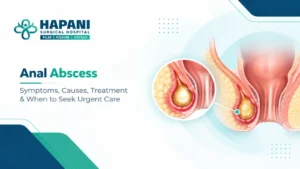
Seek prompt medical attention if anal pain occurs with fever, pus discharge, rapidly increasing swelling or a feeling of being generally unwell. These symptoms may indicate an abscess, infection or another condition rather than a simple fissure.
Black stool, dark blood mixed within stool, unexplained weight loss or persistent abdominal symptoms also require proper medical assessment.
Frequently Asked Questions
Why does fissure pain continue after a bowel movement?
The tear may become stretched during stool passage, while spasm of the anal sphincter muscle can continue afterward. Repeated irritation and reduced blood flow may prolong the pain.
Can fissure pain last for several hours?
Yes. Fissure pain may continue for minutes or several hours after a bowel movement. Persistent or recurring pain should be medically evaluated.
Can an anal fissure heal on its own?
Some recent acute fissures improve when constipation and repeated injury are controlled. Chronic or recurring fissures may require prescription treatment or a medical procedure.
Is every painful bowel movement caused by a fissure?
No. Piles, infection, abscess and other anorectal or digestive conditions may also cause pain or bleeding. Examination helps confirm the diagnosis.
When does an anal fissure become chronic?
A fissure persisting for approximately six weeks or longer may be considered chronic. Clinical appearance and response to treatment are also important.
Does every chronic fissure require surgery?
No. Treatment depends on the individual condition. Some patients improve with prescription treatment, while selected cases may require an injection or procedure.
Consult for Fissure Treatment in Ahmedabad
If you experience sharp pain, burning or bleeding during and after bowel movements, consult Dr. Uttam Hapani for accurate diagnosis and personalised fissure care.
Call: +91 92652 72404
Book an Appointment
Silver Harmony 2, C Block, 2nd Floor, Office No. 204, Opp. ICB Flora Apartment, Gota–Jagatpur Road, Ahmedabad, Gujarat – 382481.
Medical disclaimer: This article is intended for general health education and should not be used as a substitute for personal medical consultation, diagnosis or treatment. Treatment suitability and recovery vary between patients.