
Piles vs Fissure vs Fistula: Difference, Symptoms and Treatment Guide
Introduction
Many patients experience symptoms such as bleeding during bowel movements, anal pain, itching, swelling, or discomfort while sitting. The most common question they ask is:
“Do I have piles, fissure or fistula?”
Because these conditions affect the same area of the body, people often confuse one condition with another. However, piles, fissure and fistula are completely different diseases with different causes, symptoms, severity levels and treatment options. Understanding the difference can help you seek the right treatment at the right time.
This comprehensive guide explains the differences between piles, fissure and fistula, their symptoms, causes, diagnosis and available treatment options.
What Are Piles?
Piles, also known as hemorrhoids, are swollen and inflamed veins in the lower rectum or anus. They develop when excessive pressure is placed on the veins around the anal region. Common causes include chronic constipation, prolonged sitting, obesity, pregnancy and straining during bowel movements.
Common Symptoms of Piles
- Bright red bleeding during bowel movements
- Itching around the anus
- Swelling near the anal opening
- Lump around the anus
- Discomfort while sitting
- Mucus discharge
Types of Piles :
Internal Piles
Develop inside the rectum and may not cause pain initially.
External Piles
Develop around the anal opening and can cause pain, itching and swelling.
Thrombosed Piles
Occur when blood clots form inside external piles, leading to severe pain.
Learn more about laser piles treatment and how it helps patients recover faster.
What Is an Anal Fissure?
An anal fissure is a small tear or crack in the lining of the anal canal. It is commonly caused by passing hard stools, chronic constipation, diarrhea or repeated straining.
Unlike piles, fissures are often associated with severe pain during bowel movements.
Common Symptoms of Anal Fissure
- Sharp pain while passing stool
- Burning sensation after bowel movements
- Bright red bleeding
- Fear of passing stool due to pain
- Small skin tag near the anus
- Anal irritation
Many patients describe fissure pain as feeling like passing stool through a cut or wound.
Learn more about advanced fissure treatment options for long-term pain relief and faster healing.
What Is an Anal Fistula?
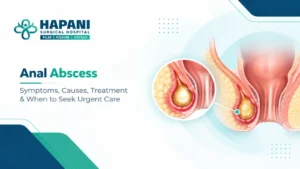
An anal fistula is an abnormal tunnel that forms between the anal canal and the skin surrounding the anus. It usually develops after an infection or abscess in the anal glands.
Fistulas generally do not heal on their own and often require surgical treatment.
Common Symptoms of Anal Fistula
- Persistent pain near the anus
- Swelling around the anal region
- Pus discharge
- Blood-stained discharge
- Recurrent abscess formation
- Foul-smelling drainage
- Fever in some cases
Because infection is usually involved, fistula symptoms differ significantly from piles and fissures. Learn more about laser fistula treatment and permanent solutions for anal fistulas.
Difference Between Piles, Fissure and Fistula
| Feature | Piles | Fissure | Fistula |
|---|---|---|---|
| Main Problem | Swollen veins | Tear in anal lining | Abnormal tunnel |
| Pain | Mild to Moderate | Severe | Moderate to Severe |
| Bleeding | Common | Common | Sometimes |
| Pus Discharge | No | No | Yes |
| Swelling | Yes | Rare | Common |
| Infection | Rare | Rare | Common |
| Surgery Required | Sometimes | Occasionally | Often |
| Recovery | Fast | Moderate | Depends on Severity |
How to Identify Which Condition You May Have
If You Have Bleeding but Minimal Pain
You may be suffering from piles.
If You Experience Severe Pain During Bowel Movements
You may have an anal fissure.
If You Notice Pus Discharge or Recurrent Swelling
You may have an anal fistula.
However, self-diagnosis can be misleading. A proper examination by a proctologist is necessary for accurate diagnosis.
Causes of Piles, Fissure and Fistula
Causes of Piles
- Chronic constipation
- Low-fiber diet
- Obesity
- Pregnancy
- Prolonged sitting
- Heavy lifting
Causes of Anal Fissure
- Hard stools
- Chronic constipation
- Frequent diarrhea
- Childbirth
- Repeated straining
Causes of Anal Fistula
- Anal abscess
- Chronic infection
- Crohn’s disease
- Tuberculosis
- Previous anorectal surgery
Diagnosis
Accurate diagnosis is essential because treatment differs for each condition.
Doctors may perform:
- Physical examination
- Digital rectal examination
- Proctoscopy
- Recto-sigmoidoscopy
- MRI scan (for complex fistulas)
Early diagnosis helps avoid complications and improves treatment outcomes.
Treatment Options
Piles Treatment
Depending on severity, treatment may include:
- Dietary changes
- Medications
- Sclerotherapy
- Rubber band ligation
- Laser piles surgery
Fissure Treatment
Treatment options include:
- High-fiber diet
- Stool softeners
- Medications
- Sitz bath therapy
- Laser fissure surgery
Fistula Treatment
Because fistulas rarely heal naturally, treatment often includes:
- Laser fistula treatment
- Fistulotomy
- Advanced surgical procedures
- Infection management
Why Laser Treatment Is Becoming Popular
Modern laser technology offers several advantages:
- Minimally invasive procedure
- Less pain
- Reduced bleeding
- Faster recovery
- Short hospital stay
- Early return to work
For many patients, laser surgery provides a safer and more comfortable alternative to traditional surgery.
When Should You Consult a Doctor?
Seek medical attention if you experience:
- Rectal bleeding
- Persistent anal pain
- Recurrent swelling
- Pus discharge
- Difficulty sitting
- Symptoms lasting more than a few days
Ignoring symptoms may lead to worsening disease and more complex treatment later.
Frequently Asked Questions
No. Piles and fistula are different conditions. However, both require proper medical evaluation.
Anal fissures are often associated with the most severe pain during bowel movements.
Most anal fistulas require surgical treatment because they rarely heal naturally.
No. Bleeding can occur in piles, fissures and other anorectal conditions.
The best treatment depends on the stage of piles. Laser surgery is one of the most advanced treatment options available today.
Yes. Laser treatment is considered safe, minimally invasive and effective for many anorectal conditions.
Conclusion
Although piles, fissure and fistula affect the same anatomical region, they are entirely different conditions. Piles involve swollen veins, fissures involve tears in the anal lining, and fistulas involve abnormal infected tunnels.
Because symptoms often overlap, many patients misdiagnose themselves and delay treatment. Early consultation with a specialist ensures accurate diagnosis, effective treatment and faster recovery.
If you experience bleeding, pain, swelling or discharge around the anal region, seek professional medical advice without delay.